
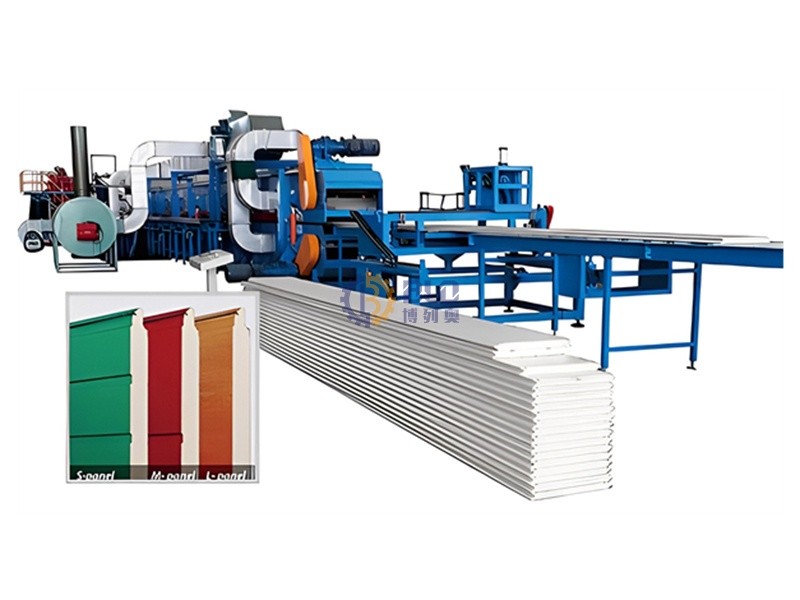
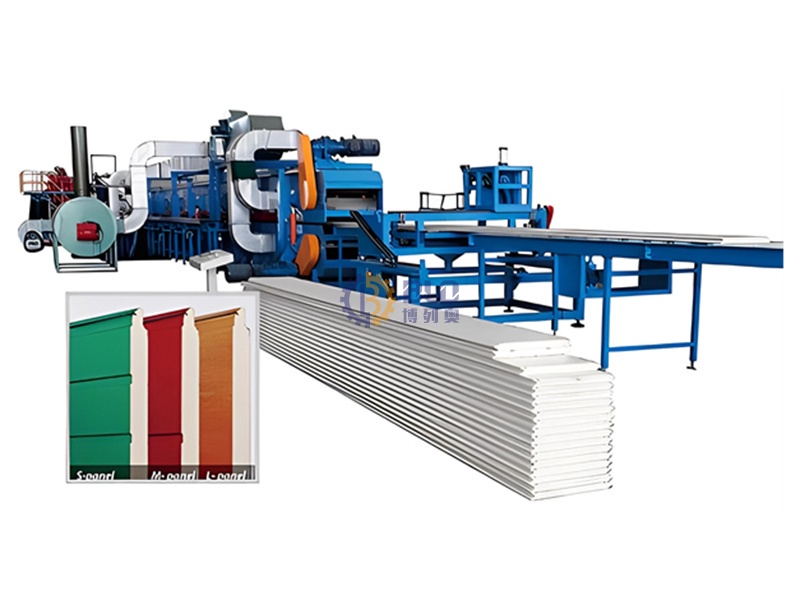
The PU Foam Garage Door Roll Forming Production Line is an advanced, fully automated manufacturing system designed to produce insulated sectional or roller garage door panels. The line integrates metal roll forming with continuous polyurethane (PU) foam injection, creating panels that consist of two metal skins (top and bottom) bonded to a rigid polyurethane foam core.
This production method produces door panels with superior thermal insulation, structural strength, and noise reduction—ideal for residential, commercial, and industrial garage door applications.
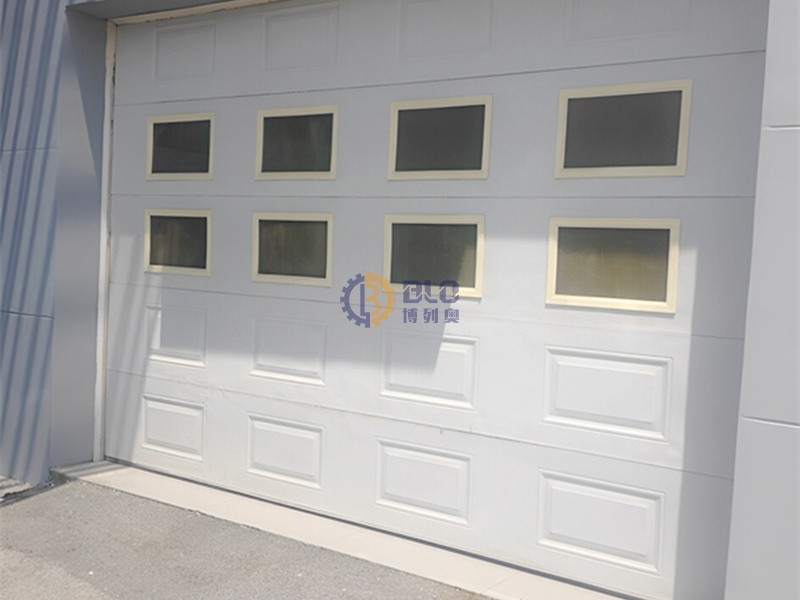
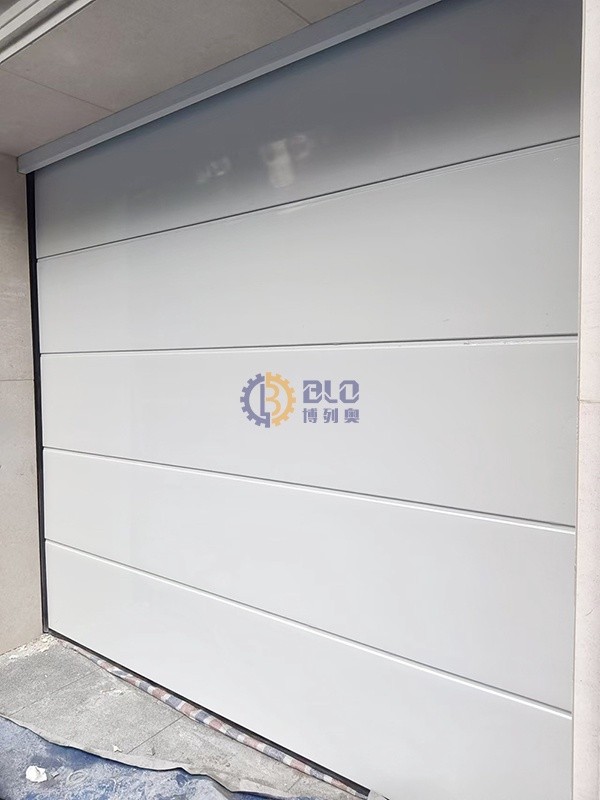
Key Advantages of PU Foam Filled Garage Doors
Superior Insulation :High-density PU foam provides excellent thermal resistance (R-value), reducing energy loss
Lightweight & Strong:Foam core adds rigidity without significant weight increase
Noise Reduction:PU foam absorbs vibration and operational noise
Seamless Bonding:Foam expands and adheres directly to metal skins, preventing delamination
Design Flexibility:Available in various thicknesses (40mm, 50mm, 60mm) for different climate requirements
Production Line Components
Production Process Flow:
Step 1: Coil Loading :Two steel or aluminum coils (0.3–0.8mm thickness) are loaded onto separate decoilers for upper and lower panel skins
↓
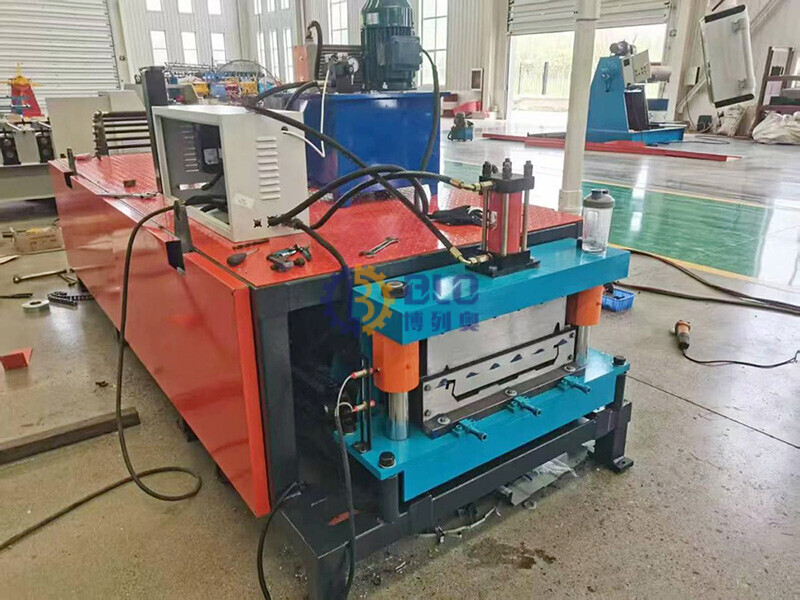
Step 2: Embossing & Punching:The metal strips pass through an embossing roller for decorative patterns, then a hydraulic press punches mounting holes, slots, and window openings
↓
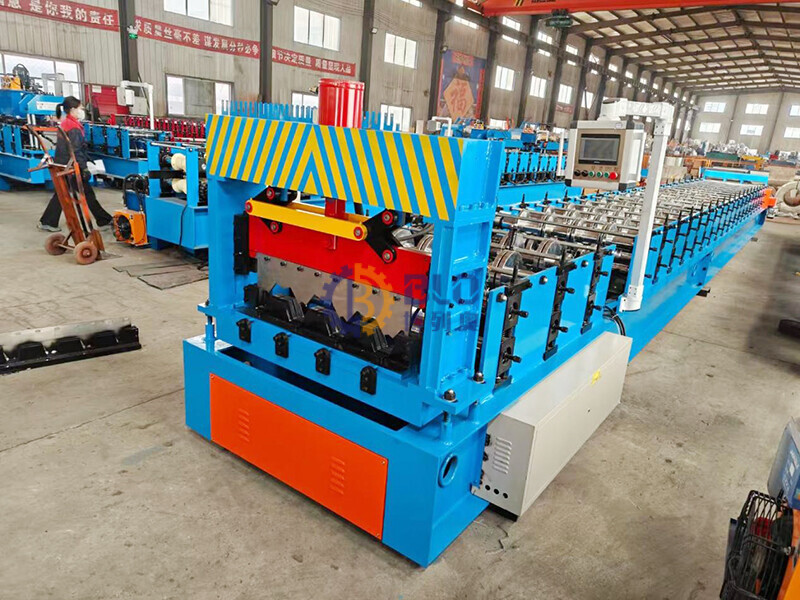
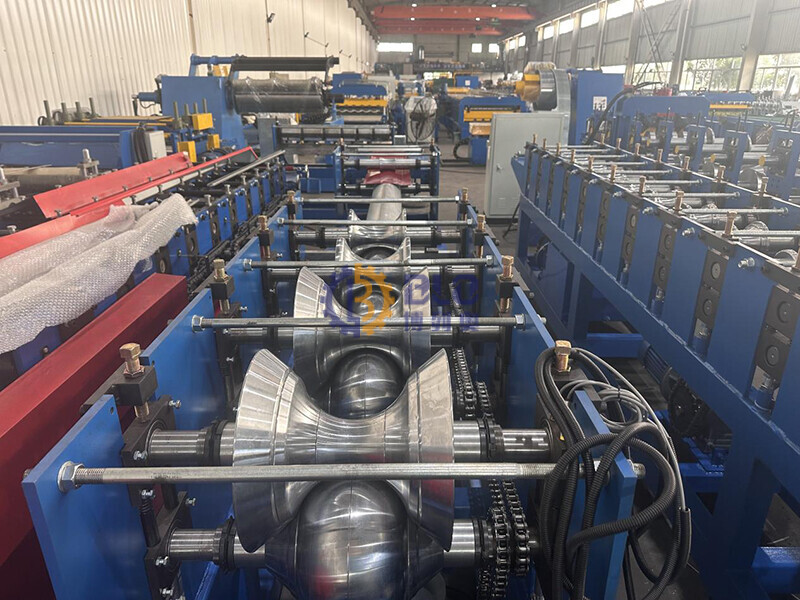
Step 3: Roll Forming (Upper & Lower Panels) :The upper and lower strips are separately fed through roll forming stations (typically 15–22 stations per panel) to achieve the desired ribbed profile. Dual construction platforms allow simultaneous forming
↓
Step 4: Metal Pre-Heating : Metal panels enter a heating chamber (pre-heating system) to warm the surface, ensuring optimal foam adhesion and chemical reaction
↓
Step 5: PU Foam Injection : A high-pressure foaming machine mixes polyol (A) and isocyanate (B) in precise ratio and injects the liquid foam into the cavity between the two metal skins as they merge
↓
Step 6: Double Belt Laminating (Foam Expansion & Curing) :The foam-filled panel enters a double belt conveyor (24 meters long) that maintains uniform thickness and pressure while the foam expands and cures. The belt includes heating zones to accelerate the chemical reaction .
↓
Step 7: Flying Saw Cutting:A hydraulic flying saw cuts the continuous panel to programmed lengths (e.g., 2–6m) without stopping production. Saw blade cutting prevents foam deformation .
↓
Step 8: Run-Out Table &Stacker: Finished panels are automatically conveyed, counted, and stacked for packaging.
Optional Upgrades
1. Automatic Stacker Counting, stacking, and strapping without manual labor
2. Window Insert Station Automated placement of polycarbonate windows into cutouts
3. Embossing Roll Set Multiple decorative patterns (wood grain, fluted, raised rib)
4. Servo Flying Saw Higher cutting accuracy (±0.3mm) for premium panels
5. IoT Remote Monitoring Real-time production data and diagnostics via smartphone/PC
Key Features & Capabilities
Closed-Section Panel Design: The production line can produce closed-section profiles where the two metal skins form a complete enclosure around the foam core, enhancing insulation and strength.
Heated Roll Forming Section: Integrated heating elements in the final forming stations accelerate PU foam expansion and improve bonding between foam and metal.
Quick Changeover: Recipe storage on PLC allows fast switching between different panel lengths, thicknesses, and profiles.
Automated Foam Control: Inverter-driven metering pumps ensure consistent foam density and reduce material waste.
Inline Punching: The 200–315 ton hydraulic press handles all hole punching simultaneously with roll forming.
Applications
Residential Sectional Garage Doors – Insulated panels for home garages
Commercial Overhead Doors – High-traffic industrial applications
Roller Shutter Doors – PU foam filled slats for security and insulation
Cold Storage Doors – Maximum thermal efficiency with thick foam cores
Conclusion
The PU Foam Garage Door Roll Forming Production Line represents the industry standard for manufacturing high-quality insulated garage door panels. Combining precision roll forming, continuous high-pressure foaming, and automated cutting/punching, these lines deliver consistent, energy-efficient panels at high production speeds. With growing demand for energy-saving building products, investing in a PU foam production line offers significant competitive advantages for manufacturers targeting residential and commercial markets.

Ask For A Quick Quote
If you are looking for more information on our services, or how we could potentially help, we would love to hear from you!
Contact Us